
We get asked a lot about how we know the soil will hold they weight of the crane, and the load.
It’s a good question.
And the complexity of the answer often surprises people. As we always say, there’s a lot more to crane work than meets the eye!
It’s all about engineering data and assessment
We follow a combination of engineering data, site assessment, and physical testing to make sure the soil can safely support the crane’s weight and load.
Review of Site & Geotechnical Reports
For planned jobs (especially construction sites), operators or lift planners will first check:
- Geotechnical/soil reports
- Site compaction data
- Engineering drawings
These reports tell us:
- Soil type (clay, sand, fill, rock)
- Load-bearing capacity (kPa or tonnes/m²)
- Any underground risks (voids, services, basements)
Visual Ground Inspection
Before setup, the crew walks the site looking for red flags:
- Soft, wet, or recently filled ground
- Cracks, sinkage, or uneven surfaces
- Signs of underground services or trenches
- Water pooling or drainage issues
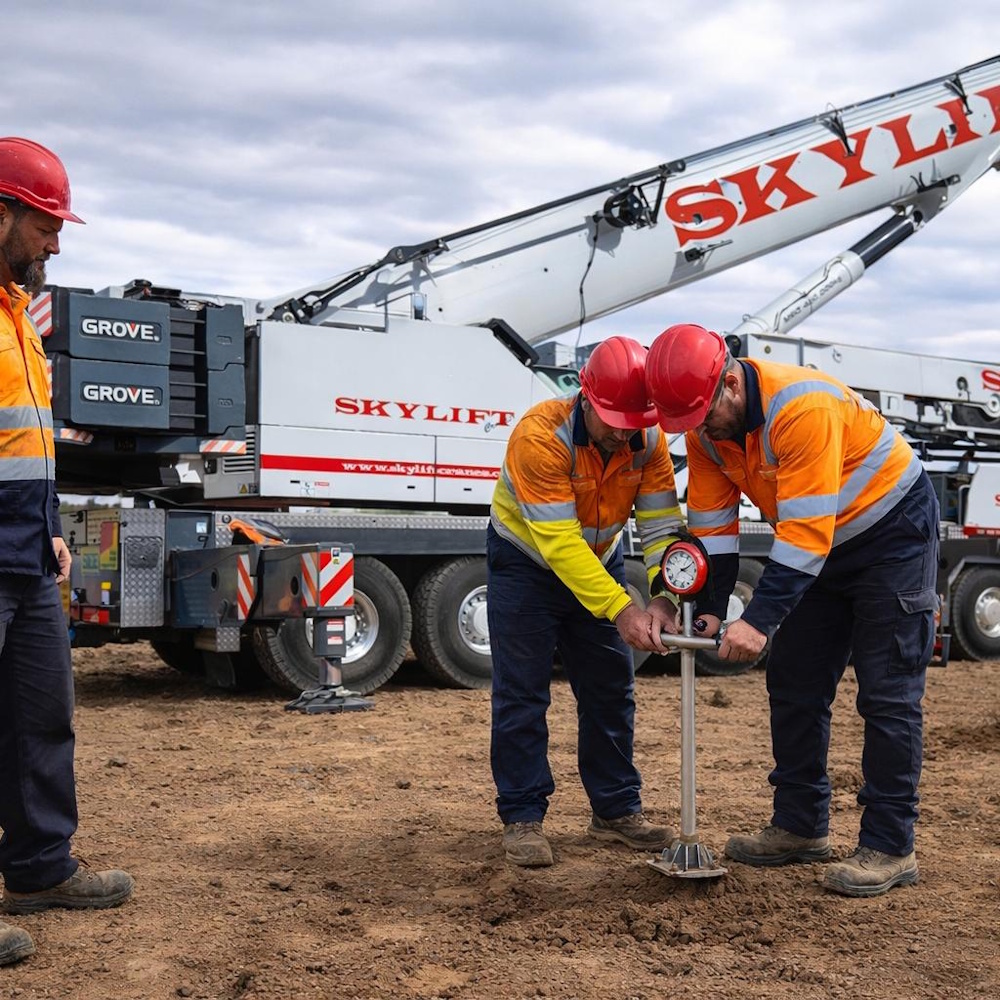
Dynamic Cone Penetrometer (DCP) Testing
On some sites, especially where there’s uncertainty, crews may use a DCP test:
A metal rod is driven into the ground using a hammer and the rate of penetration indicates soil strength.
Use of Outrigger Pads / Crane Mats
Even if soil is adequate, crews almost always use:
- Timber mats
- Steel plates
- Engineered outrigger pads
These:
- Spread the load over a larger area
- Reduce pressure on the ground
- Prevent sinking or tipping
Test Load / Initial Settle Check
Once the crane is set up:
- Operators may apply a small test load
- Watch for settlement or movement
Even the most advanced crane becomes dangerous if the soil can’t support it – which is why ground assessment is taken extremely seriously on every professional job.